What were some key stylistic innovations of the French New Wave? How did it change editing?
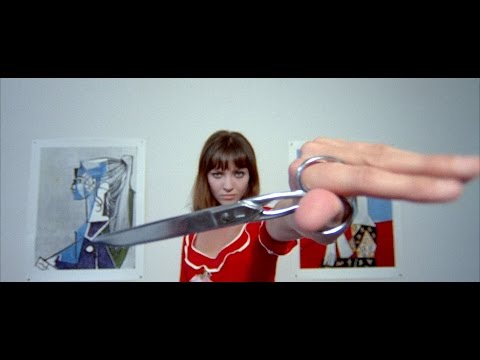
Some key stylistic innovations of the French New Wave are the rule breaking, the messages, and the unconventional editing. French New Waved stemmed from four film enthusiasts who thought that movies felt stale and boring due to a lack of innovation; thus, they began to make their own films that strived to be different. Regarding the story and message, New Wave was meant to create a more personal kind of cinema, telling stories that more closely represent the opinions and experiences of the filmmakers behind them. Furthermore, New Wave changed editing as a prominent method was to abandon traditional editing techniques. One such rule and technique was the approach to jump cuts. French New Wave used jump cuts in order to contrast shots, often cutting out anything in a scene that they deemed unnecessary. This led to faster paced films, which influenced today's editing and pacing. Furthermore, the use of jump cuts influenced montage theory and helped to create the montages that we know today.
After watching this entire video, what are 3 key things that you've learned about acting from this lesson? What changed your understanding about the importance of acting in film?
Three key things that I've learned about acting from this lesson are how actors bring life to the film, the various methods that have been adopted and developed, and important advice in regards to acting. Actors are the ones who bring the character's to life. You can do so many things with lighting, framing, and editing, but all of it can be limited or superseded by an actor's performance. Making the audience feel something is key in film and the way that the actor portray's their character is a major aspect of that. There have stemmed three well-known methods when it comes to acting technique: the Stanislavski System, the Strasberg Method, and the Adler Method. The Strasberg and Adler methods both stemmed from the Stanislavski System, with Strasberg focusing on emotional memory and Adler focusing on imagination. However, all of these methods strive to portray some level of truthfulness into a performance, which helps to make it feel real. This goes into the third thing which is that many people advise and encourage you to find your own method, not to follow one single method religiously. Instead, you should find a way that works for you but still brings the character to life. Furthermore, acting is more than just reciting words and memorizing lines, its the performance and emotion behind the actions and words. Something that changed about my understanding about the importance of acting in film is the fact that actors are who bring the characters and thus the story to life. Characters are one of the most pivotal parts of a story; being someone to root for, someone to act as an obstacle, someone to make the audience or protagonist question things, and so on and so forth. Although characters are tools to move the story forwards and give the audience something to latch onto, people won't connect to the story if those characters feel flat and fake. That's why it is absolutely necessary for actors to bring life to the characters that they play, it adds the emotional drive and impact of each moment and scene.
What is method acting? How was it different from the Stanislavski System? How did Brando, James Dean, and Monroe change their acting style in the 50s?
Method acting was an American interpretation of the Stanislavski System introduced by Strasberg. The Strasberg Method focused on emotional memory, which was thinking back to past memories where you felt what the characters did. Method differs from the Stanislavski System as he had abandoned emotional memory and shifted towards imagination, which was essentially taking a life's worth of experiences and ask the "what ifs" needed for the scene. This was key because it created two distinct deviations from Stanislavksi in America, one focused on emotional memory and the other by imagination. Brando, James Dean, and Monroe changed their acting style in the 50's because of teachings from Strasberg and Adler. Strasberg takes credit for Brando's performance, but Brando denies his claim, stating that he learned his technique from Adler. However, James Dean and Marylin Monroe were taught by Strasberg and thus popularized Method as how an actor prepares for a role.
What was traditional acting on the stage like in the 19th century? How did Stanislavski change acting? What was the Stanislavski System?
Traditional acting on stage during the 19th century was still using the declamatory style that was seen in ancient Greece and Rome as (1) it was necessary due to the technical limitations and (2) it was seen as the traditional style of how theatre should have exaggerated acting. The idea was that theatre was only truly art when there was idealization or stress; where it wasn't naturalistic acting but rather simulated. Stanislavski changed acting as he found this simulated style of acting boring and was more interested in "living" the part. The Stanislavski System is a psychological approach to acting that focuses on getting the actors "into the moment." This includes (1) preparation of the voice and body, (2) studying the role, and (3) truth as the actor feels as though what happens to the character is real. To create realism, Stanislavski used emotional memory, which is where you think back to a time when you felt that feeling in order to show it outwardly; however, this was abandoned due to causing actors to go crazy.
How did Greek and Roman theatre create the art form of acting? What was commedia del' arte's influence on the development of acting?
Greek and Roman theatre created the art form of acting through the development of theatre. Theatre began as spoken stories that were passed down through word of mouth. Eventually, theatre were created to develop the Greek god Dionysus with stories that included Lampoons, Comedies, and Tragedies. The performances had to be much bigger and declamatory; having to focus on vocal projection because of the larger open spaces that the crowds were in. However, theatre momentarily died during the Dark Ages after Rome fell. Commedia del' arte's influenced the development of acting as it was an incredibly popular form of theatre that spread amongst different cultures. It had many character types and acting styles that influenced early film as well such as Charlie Chaplin.
How did French cinema critics begin to influence the development of auteur theory? What were two key critiques they made on the difference between auteur directors and traditional directors?
French cinema critics began to influence the development of auteur theory as . Two key critiques that they made on the difference between auteur directors and traditional directors were and