Thursday, April 30, 2026

Lucasfilm Fieldtrip

After screening the show and hearing the talented artists at Lucasfilm, what insight or piece of advice from their experience in filmmaking and visual storytelling stood out to you the most?

    Some insights from their experience in filmmaking and storytelling that stood out to me the most was the different ways they got into their respective fields and their workflow. Each person had a different story for how they found themselves in their current position, each one was relatable and had good advice. For instance, a few of the speakers didn't know what kind of work they wanted to do, or they had an idea that didn't work out. However, they tried out different areas and changed course, finding passion and work viability in different areas. I feel that this is a good way to prepare into the working world as things may not work out the way you expect and, instead of dwelling on it or letting it drag you, you should take it in stride and develop in a different direction.

Monday, April 27, 2026

Suspense Lighting Tutorial

What three key techniques do these filmmakers use to create tension with their lighting in this scene?  How did they use lighting effectively?

    Three key techniques that these filmmakers use to create tension with their lighting are the use of shadow, motivated lighting, and under lighting. Throughout the scene, they have many aspects cast in shadow, focusing on mainly lighting the actor's face to show the emotion and a few background elements in order to improve the visual aesthetics. Additionally, they found that keeping the monster entirely silhouetted made for a more tense feeling than it did when lighting him. The majority of the light sources in the scene are motivated through the pool or the actress' phone screen, creating a more immersed feeling. Additionally, both sources create a slight under lit look on the actor, which adds to the tension and uncomfortable feeling. They use lighting effectively as they created a dark and mysterious scene while still showing the important details and having a aesthetically appealing scene.

Friday, April 24, 2026

Horror Lighting Tutorial

What are three key techniques that these filmmakers use to create tension with their lighting in this scene?  How did they use lighting effectively?

    Three key techniques that these filmmakers use to create tension with their lighting in this scene are the different ways of lighting the protagonist vs. the monster, extreme colors, and the use of darkness. When it came to the protagonist, they utilized more typical lighting techniques, such as three-point-lighting and making sure that the face was illuminated at specific moments in order to show the character's emotions. However, when lighting the monster, they kept her bathed in a lot more shadow, making it much harder to make out who or what she is. Additionally, in the big reveal and jump scare, they used under lighting, which distorted her features creating a more ghoulish appearance. Another technique that they used was extreme coloring. This scene took place at night in a home, so they the color blue heavily in order to convey that nighttime feeling. Using extreme colors can make the setting feel more unnatural and add to the discomfort of the scene. Other common colors used are red and green. Another technique that was used was the darkness. In other genres, you'd typically want all the important details to be well lit so that the audience can see it; however, this scene was underexposed and there were many moments where you couldn't see the actor's face. That being said, they used lighting effectively as they created a strong and tense atmosphere without sacrificing visual understanding and important details.

Thursday, April 23, 2026

Horror Lighting

What are the historical, aesthetic, and psychological reasons for lighting from below in horror films?

    There are a variety of reasons for lighting from below in horror films. Historically, this has been used throughout the past, both in and out of film. One example is using a flashlight under your face while telling a scary story. Another reason may be that it may symbolize light coming up from Hell, which contrasts the symbolism of light coming down from Heaven. Aesthetically, lighting from below distorts the features of the face, which is credited to being the primary reason why it appears scary. Lighting from below also has psychological effects because it creates and uncanny look. Instinctively, humans are designed to identify other human faces, so when the face is distorted, such as in uplighting, it appears disturbing because of the unnatural feeling.

Wednesday, April 22, 2026

Horror Film Techniques

What are the key tips that you learned from this video? What tip do you feel you could put to use in your horror film coming up?

    The key tips that I've learned from this video are atmosphere, sound, and lighting. Atmosphere is a key part of a horror film's mood and setting. Although it is common for horror to take place at night, which has a naturally unsafe feeling, it can also be effective to have it set in the day or in the rain. However, when deciding your atmosphere, you'll need to consider the logistical aspects. For example, if you want it to be raining for a scene, you'll either need to plan extensively by finding a day with rain that works with schedules or you'll have to create your own rain somehow. Sound is a strong contributor to the tension in horror as it can create the eerie feelings that change the feeling of a shot. Sound mixing and design is really important in that regard as it can elevate a film in both production quality and emotion. Lighting is very important for the visual style of a horror film, people often utilize natural shadows and underexposed lighting in order to bathe the shot in more darkness, adding to the mystery and tension. A tip that I feel I could put to use in my upcoming film is the sound. I could introduce more sounds into a scene in order to enhance the emotions and feeling of it.

Tuesday, April 21, 2026

Ways Horror Films are Manipulating You

15 Ways You Didn't Even Realize Horror Movies Are Manipulating You Into Fear

In a detailed paragraph, explain how you are using or could use 4 of these steps to help develop your horror film story before you begin shooting.

    Four of these steps that I could use to help develop my horror film story before shooting are (1) liberal use of negative space, (2) reflections and mirrors, (3) scenes that are longer than they need to be, and (4) jarring editing techniques. Other genres often strive to achieve a balanced image that has a good amount of both positive and negative space. Because of this, when a film has too much negative space, it can create an uncomfortable feeling, like something is about to happen. The use of reflections and mirrors have conditioned audiences to expect something bad to happen when one is being utilized in a horror film. Thus, by having a reflection, you can ramp up the tension for the audience. People often have some understanding of when a scene should end, such as when an action or conversation is completed. So when a scene lasts longer than audiences expect, it makes them feel like something else is about to happen. Using jarring editing techniques such as jump cuts can be an effective way to make the audience feel like they're seeing something that they aren't, such as the stabs in the Psycho shower scene.

Monday, April 20, 2026

History of Horror Films Pt. 2

Why do you think that horror films happen in cycles?  In your opinion, what is it about horror films that makes this happen?

    I think that horror films happened in cycles because . The thing about horror films that makes this happen is .

Friday, April 17, 2026

The History of Horror Films Pt. 1

How have horror films changed through the decades? How did psychological horror develop in film? What was the universal influence on the development of horror films?

    Throughout the decades, horror films have gone from . to . Psychological horror . The universal influence on the development of horror films is .

Thursday, April 16, 2026

The Psychology of Scary Movies Pt. 2

What makes horror films so attractive to audiences? What are some of the theories around the popularity of horror films? How do horror films relate to nightmares?

    The thing that makes horror films so attractive to audiences is a variety of reasons, primarily having to do with the emotions which they evoke. Some theories around the popularity of horror films are catharsis, excitation transfer, curiosity and fascination, disposition alignment, sensation seeking, gender socialization, and societal fears. The first theory is that horror allows audiences to "purge" or experience their negative emotions in a safe way through catharsis. The excitation theory is where the negative feelings created will later amplify the positive feelings of the hero winning at the end. Another theory is that these films exist outside of the norm of the real world, thus the allure is in seeing something abnormal. The sensation seeking theory is that people are seeking the thrill from horror films, much like one does on a rollercoaster or bungee jumping. The disposition alignment theory is essentially that people want to see "bad" people punished, often by being killed off. The gender socialization, or "snuggle," theory is where people enjoy it for how horror films can be a sort of representation or strengthen gender norms, such as a girlfriend being scared or a boyfriend not being scared. Societal fears often drive the premise or reflect the themes of horror films that are made in that time. Because of how many different theories there are, it is safe to say that many of these could be true for different people as people who watch horror movies could watch them for different reasons. Horror films relate to nightmares as movies and cinema is often compared to dreaming; thus horror could be attributed to nightmares. A primary theory about why we dream is to sort through information, thus watching a film is like that as we could observe scenarios and gain understanding or practice skills in a way. Thus, horror films allow us to practice or instinctual survival skills, such as fight or flight, in a safe space.

Wednesday, April 15, 2026

The Psychology of Scary Movies pt. 1

What are horror films? How do Tension, Relevance, and Unrealism play into the popularity of horror films?

    Horror films are movies that often appeal to the audience's fear and negative emotions, with darker themes and oftentimes death and gore. The three key factors that play into the popularity of horror films are tension, relevance, and unrealism. Tension is created through the mystery, suspense, gore, terror, and shock, which is the foundation for horror films in both story and filmmaking. Relevance pertains to universal, cultural, subgroup, and personal relevance. Universal relevance relate to universal fears and experiences, such as death or the unknown. Cultural relevance is things that relate to society and its issues or current fears, such as war or disease when fear of those are heightened. Subgroup relevance are when they pertain to specific groups, such as teenagers, which have a lot of horror films that relate to them. Personal relevance is when theres identification with the antagonist/protagonist, or a personal condemnation of the antagonist. Unrealism is very important to horror films as it is much more difficult for people to enjoy, let alone sit through, these themes and visuals when they believe or know that it is real life. People are far more disgusted and unsettled by gory documentaries than they are to gory films because they know that movies aren't reality.

Tuesday, April 14, 2026

Spielberg on Horror

Watch: Is Horror the Secret to a Great Blockbuster?

How does Spielberg craft such effective horror scenes in his blockbuster films?  What are three techniques that you've learned in this unit that Spielberg uses?  How does he use them?

    Spielberg crafts such effective horror scenes in his films by . Three techniques that I've learned in this unit which Spielberg uses are , , and . He uses them .

Monday, April 13, 2026

What Makes a Movie Scary

Explain the importance of buildup and payoff in a horror film. What aspects of the example made it scarier?

    Buildup and payoff is key in a horror film in order to . Some aspects of the examples that made it scarier are .

Friday, April 3, 2026

Duvetyne Cloth

What is duvetyne cloth used for?  What is so special about it?  Explain three different uses for it on set and what you should bring in addition to use it.

    A duvetyne cloth is a black flame retardant cloth, which is the same material used on solids and flags. It can be used for a variety of purposes on set. Its so special because they are thick and opaque, preventing light from leaking through, and they are flame retardant so they are safer to use around lights and film equipment. Three different uses for duvetyne on set are to protect walls, black out windows, and to skirt a light. In less professional sets, you can use whatever cloth you want to protect walls, such as socks; however, in professional sets, a duvetyne is standard for this purpose. You can use the cloth to black out windows, which could allow you to film nighttime interior scenes all throughout the day and night without worry of lighting changes. You can also use it to skirt large lights, which can prevent spill. In addition to the cloth, you should also bring clamps and clips so that you can mount the duvetyne for whatever purpose you need it for.

Thursday, April 2, 2026

Solids

What does a topper and a bottomer do?  What are cutters used for?  Whats a lenser?  What is a courtesy?

    A topper is used to cover the top of the light, keeping the subject lit but eliminating spill on the background. A bottomer is the same; however, it instead is used to block the bottom, and it can be used to block the subject from the background. Cutters are 2'x6' and, like floppies, can open up, allowing it to become a 4'x6'. These are good for when you have a larger shot and need a longer cut of light. A lenser is simply shading the light that's hitting the lens in order to eliminate lens flare, which can be done in a variety of ways. A courtesy is when you flag a person or monitor in order to eliminate harsh reflections, often when outdoors. This is most typically done with a top hinge floppy, and if the wind is an issue, you can clip the floppy to the stand, or weigh down the bottom using a rod or by clipping some form of weight to it.

Wednesday, April 1, 2026

Rylee, Guest Speaker Reflection

Refer to our guest speaker post about Rylee yesterday.  Reflect on what you learned in her workshop.  What did you enjoy about it?  What did you find interesting?  What do you want to learn more about?  How can you implement this knowledge into your productions going forward?

    Some things that I learned from her workshop were networking and tips for starting out in the industry. She talked about how the sound mixer community is much smaller compared to other departments. Thus, it is especially important to know other people as they can get you jobs and you can borrow gear from one another. She started out in the industry by going to De Anza and networking with people. A big tip she gave was to cold call/message people and get to know people in the industry so that they may offer jobs to you in the future. Something that I enjoyed about her workshop was getting to see a professional's sound kit. She had an analogue mixer and mic packs, which is different from the all-digital sound equipment that we primarily use. Something that I found interesting was that there aren't really any rental houses for sound gear, so she has to supply all of her own gear and/or borrow gear from other sound mixers. Something that I would like to learn more about is the difference between working professionally vs. working for class projects as I've only ever done crew roles for class productions or for people who are recent alumni of SVCTE so I have little experience of what differences there may be compared to professional sets. I could implement a lot of her tips and knowledge into future productions by being much more proactive in networking and building industry connections so that I could set myself up for the most opportunities.

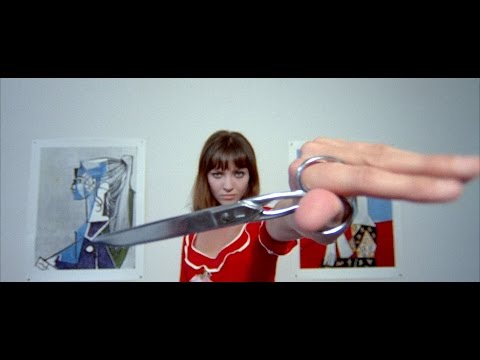
Innovations of the New Wave Pt. 1

What were some key stylistic innovations of the French New Wave?  How did it change editing?     Some key stylistic innovations of the Fren...