Tuesday, November 12, 2024

Steadier Handheld Moving Shots

What are the tips that John gives to give steady shots in this video?  How can you use this in your next video?

    The tips that John gives are to use the strap of a smaller camera, walk heel-to-toe going forwards, lower your center of gravity, and walking on the balls of your feet going backwards. Many smaller cameras have straps and if you want a steadier moving shot, a way to do that is to put the strap around the back of your neck and hold the camera out until there's tension in the strap. This creates essentially three points of contact, making the camera steadier. The next tip was to walk heel-to-toe, which lessens the shakiness in each step. To do this, simply start with your heel and roll out to your toes. The next tip was to lower your center of gravity by bending your knees. This helps to lessen the impact of your steps and is important when you want to move faster, going lower when you increase your speed. The last tip was to walk on the balls of your feet when you go backwards, which provides the same purpose as walking heel-to-toe. It will lessen the impact and shakiness of each step when moving backwards. I can use this in my next video by apply the tips when taking my shots. Most of these are easy things to keep in mind so I just need to remind myself to do them and improve the steadiness of my shots.

Friday, November 8, 2024

The Wheelchair Dolly

What are three key tips that you found valuable from this video?

    Three key tips that I found valuable from this video are to take a look around the location before finalizing the script, leave the location exactly as you found it, and using a wheelchair as a cheaper alternative to a dolly. After writing out your script, you'll need to find a location and sometimes you can't be picky about where you shoot. So instead of turning down a location, you should first scout around and see how you can adjust your script to fit the location. Leaving the location how you found it is basic courtesy and helps maintain a professional relationship with the owner's of wherever you shot. This opens up the ability to ask to come back for any reshoots that might be needed. Using a wheelchair is a considerably cheaper option to dolly equipment and can allow you to take a dolly shot without extreme costs. If you're shooting entirely handheld, then this also maintains that handheld feel without being way to shaking when tracking the movement of your actors.

Thursday, November 7, 2024

Dolly vs. Zoom Shots

What is the difference between zooming and dollying?  What do dollying and trucking add to the shot?

    A dolly shot is a moving shot where the camera moves smoothly through a scene towards or away from something. It can also move parallel in a trucking shot or around something in an arc. A zoom is an artificial magnification, which doesn't change the spacial relationship of the actor, elements of the shot, and the camera, unlike the dolly shot. As the dolly shot physically moves the audience through a scene, it can have the effect of forcing your audience towards danger or leave a situation. It can be used to move from an over-the-shoulder shot to just a closeup of the subject to make the audience connect more intimately with that character or to focus on a particular detail.

Wednesday, November 6, 2024

Camera Movement

Movement in film can be used in a variety of ways. What are some that you noticed are mentioned in this film? In what ways are they used? What are some films that you like that you could go home this weekend and study for their movement? What aspects of their camera movement interest you? Please explain.

    Some movement techniques that are mentioned in this film are trucking, panning, a dolly, and a jib shot. Trucking and panning can be used to follow subject(s) in motion, which is shown in the film through a dialogue scene. A dolly shot is used to move the focus, either closer or further in order to direct the audience's attention and give them feelings. The ways it is shown in the film is with a character focusing on an object, a dolly shot in to show that, and a character looking into a dark room, a dolly shot out to show that room. The jib shot or crane shot allows for vertical movement and can be good for establishing shots or moving the camera to a lower or higher angle on a subject. Some films(or shows) that I like that I could go home and study for movement are Stranger Things and Harry Potter. I plan on going to the theater this weekend to watch Smile 2 and I can try to pay attention to the movements while watching as well. The aspects of camera movement that interest me are dolly and jib shots. The way that the image changes in a dolly in and out looks incredibly interesting and I want to learn how to use a dolly to create those shots. The same goes for jib shots, the motion and feel of them are very visually appealing and I want to be able to see how they are made and what I can do with them.

Tuesday, November 5, 2024

Screen Direction

What does the video narrator have to say about how characters should enter and exit the frame?  What happens if these rules are not followed?  How does this apply to diagonal movement in the frame?

    The video narrator says that if characters exit from one side, they should be entering from the other side of the frame, which helps the audience understand that they are moving in the same direction towards the same goal. For instance, if in the first shot a character enters from the left and exits to the right, then the next shot should show them entering from the left again. You should also maintain the 180° rule and stay on one side of the character unless you cut in a shot from a neutral position on the line of action. If these rules aren't followed then it will look like the subject changed directions and are heading back the way they came. When it comes to diagonal movement, the rule still apply. Having the character enter the next shot from the opposite side that they exited maintains screen direction no matter if they exited in a close up or long shot in the previous shot. However, you should be weary of graphic imbalances where you place a cut to where the subject is small when the subject is close to the camera. This will feel strange to the audience and feel like a continuity break so you should either place the cut when the subject is the same size or when they leave the frame.

Monday, November 4, 2024

Height of Camera

What do low vs. high angles mean in relation to each other?

Although you can use high and low angles to simply add visual interest, these angles are also able to amplify certain emotions and feelings to the audience. Low angles can make the subject appear larger and thus stronger or more dominant while high angles makes the subject appear smaller and weaker. This means that in a scene, you can use both to show a power imbalance between two characters. By having one character higher than the other—either by having one stand and the other sit or having one on higher ground—you can simply match their eye lines in the shot reverse shot to have each character be viewed from a low or high angle. This will make one character appear to be in charge and the one in control of the scene.

Friday, November 1, 2024

Getting the Shot Right

What are three key things that this video teaches you about composition? Why is each of them important to the images that you shoot?

    Three key things that this video teaches about composition are camera position, the Rule of Thirds, and framing. The camera position is important as shooting your subject from a lower position makes them appear more dominant and bigger while shooting from a higher position makes them seem weaker and smaller. The rule of thirds adds more visual interest to the image and gives you guidelines that help with other rules and framing. Speaking of framing, it is important because bad framing looks sloppy, odd, and can give the audience a feeling that conflicts with the scene. The biggest concern with framing is how bad framing can make the audience uncomfortable when you don't intend it. That feeling can be used if intentional, but otherwise should be avoided.

Innovations of the New Wave Pt. 1

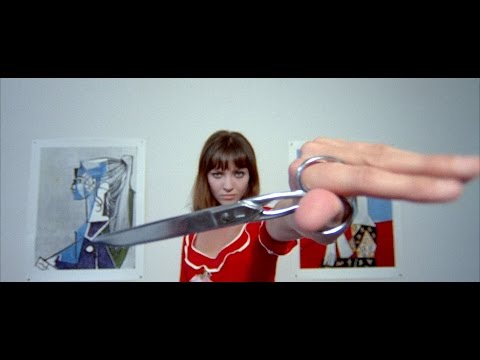
What were some key stylistic innovations of the French New Wave?  How did it change editing?     Some key stylistic innovations of the Fren...