Wednesday, March 12, 2025

Wrapping a Cable

Why are A/V cables wrapped over/under and power cables wrapped over/over?  Why is this an important skill for a beginning filmmaker?

    A/V cables are wrapped over/under because it follows the way that the cord wants to coil, helping to reduce tension and not get tangled. Power cables are wrapped over/over because it releases the tension as you go it and is the way that the cord naturally coils. Both of these techniques are used to prevent tangling and damage, increasing the lifespan of the cable. This is an important skill for a beginning filmmaker because cables are an integral part of using a lot of equipment; sound, lights, monitors, etc. all use cables to be powered and/or connected. So knowing how to properly wrap cables helps to increase efficiency and make them last longer, which is important especially when beginning as you may not be able to afford replacing equipment all the time. Additionally, knowing the skill can make you appear more professional, which is very important starting out if you want to break into the industry.

Tuesday, March 11, 2025

Mono vs. Stereo

What is the difference between stereo and mono recordings? What are 2 things that you found interesting in this article? Why?

    The primary difference between stereo and mono recordings are the amount of tracks that they have. Mono, short for monophonic, have a single channel---meaning that any audio will sound like it comes from a single point, no matter how many speakers there are. As for stereo, short for stereophonic, the audio goes through multiple channels and can give the illusion of being directional. Because of the lessened complexity, mono recordings are cheaper and easier to make whilst stereo recordings are more expensive and require more skill to create. Two things that I found interesting in this article were how stereo became popularized and the techniques to record stereo sound. It was interesting to learn that stereo sound had existed as early as 1881 but hadn't become popular until the introduction of magnetic tapes. Regarding the ways to record stereo sound, I found the X-Y and M/S techniques really interesting. When I was trying to think about how stereo was recorded, I pictured the A-B method. So to see two other techniques were very intriguing. I never even knew that bi-directional mics existed prior to this article, besides those strange mics that look like ears that ASMR content creators use.

Monday, March 10, 2025

How Star Wars Revolutionized Sound

What was the effect of Star Wars on the movie industry? How did it affect the audience at this time? What were the long term historical trends that Star Wars set into motion after this?

    Star Wars had been the push that the industry needed, setting a new standard for sound in films and lighting a fire under the butts of exhibitors for them to upgrade their equipment. Although audiences of the time were unlikely to experience Star Wars to its fullest quality, the sound and the film were very well received, giving audiences a new craving for surround sound.  The Star Wars films set into motion a better movie-viewing experience, helping to push for better technology and a new certification project under THX that helped theaters increase their quality and gain more popularity.

Thursday, March 6, 2025

Why is Sound Important

In your own words, write an in-depth reflection on three ways that sound is important in television and film?

    Three ways that sound is important in television and film are for entertainment value, emotional impact, and storytelling. Even during the silent film era of filmmaking, movies were accompanied with music. Orchestras, organists, and pianists were all things you can expect to see along side a film. This is important because if a film had no sound, it would be much more difficult to maintain the audience's attention. Another area of importance is the emotional impact that sound can add. Music has always been able to elicit particular emotions from listeners, so combining that with film can introduce new feelings, e.g., tension, discomfort, sadness, melancholy, etc. as well as amplify the emotions of a scene. Sound also can affect emotions with the SFX; such as a strange noise in a horror movie or a flatline at the end of a scene or movie. The third way that it is important is because of its storytelling capabilities. Sound can provide very important context with SFX, dialogue, and music. 

Wednesday, March 5, 2025

The Threat of TV

Why was Hollywood threatened by television? What were three key reasons it became a threat?

    Hollywood was threatened by television because it would lower the movie industry's profitability. Three key reasons that it became a threat was the changing demands of consumers, it's convenience, and the anti-monopoly rulings and restrictions placed by the U.S. Government. Following WWII, suburban culture became increasingly popular with money saved through the war. Thus people were able to start spending more on consumer goods and thus a demand for televisions rose. This is further pushed by the convenience of having at-home entertainment. Suburban culture made theater palaces less accessible and having a cheap TV in your home discouraged people from going out and spending money to see movies. When big industries tried to break into the television business, the government refused to give licenses to producers that have previously been charged with monopolistic practices (which was most of the big studios). Thus, profits for movies were on a huge decline and producers had to find ways to have more incentives for people to watch films, e.i., airing their films with tv producers or making their films more vulgar as television had strict rules for what they aired.

Tuesday, March 4, 2025

The Golden Age Ends

What caused the end of the golden age of Hollywood? What was so significant about this change in its history?

    The golden age of Hollywood ended because of the Supreme Court ruling in 1948 that made the Big 8 divest in movie theaters and end non-competitive practices. What was so significant about this change was that it opened the movie industry up to independent producers and exhibitors and changed the way that producers and exhibitors made money. Oftentimes, theaters have to give a huge percentage of ticket profits to the producer and theaters get gradually more of a percentage as time goes on (90-95% to producer week one, 80% week two, etc.) This also pushes producers to make movies that are more likely to be guaranteed box office hits, i.e., movies with less creativity and less unique choices like sequels and constant rehashing of similar tropes and ideas that "work." Another outcome of this was that theaters could no longer rely on ticket sales for income because of how small of a percentage they receive. Thus, the era very overpriced snacks were born (in the 1970s).

Monday, March 3, 2025

The Last Silent Films

According to this article, why did Hollywood switch over to "talkies" so fast? Why was 1928 such a pivotal year for silent cinema?

    Hollywood made the switch over to "talkies" so fast because audiences of the one of the first movies to use synchronis sound, the Jazz Singer, had shown how much audiences wanted to hear as well as see the films. Because of the revealed demand, Hollywood realized that it would be much more profitable and interesting to audiences if they switched to talkies. 1928 was such a pivotal year for silent cinema because it was the only year in which the silent film era and sound pictures intersected—silent films having essentially died out by 1929.

Innovations of the New Wave Pt. 1

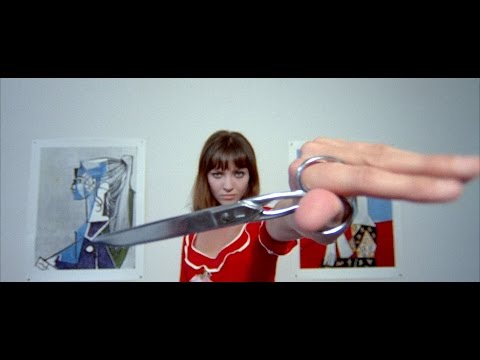
What were some key stylistic innovations of the French New Wave?  How did it change editing?     Some key stylistic innovations of the Fren...