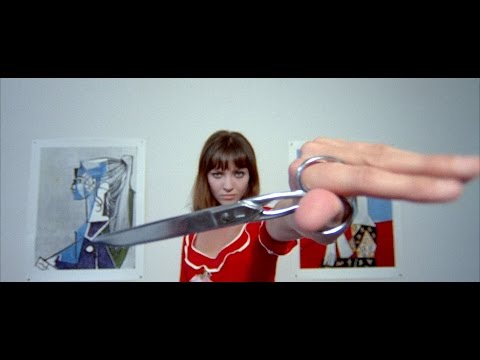
What are three interesting things that you learned from this video? How could you begin to start thinking about sound design in future video projects?
What are three interesting things that you learned from this video? How could you begin to start thinking about sound design in future video projects?
What is the foley artists' role in crafting sound effects? Explain in detail three different things that you learned in this video and how they affect the final film.
The foley artists' role in crafting sound effects is to create all the sounds in order to bring the film to life by recreating sound live to enhance the detail and drama of a film. Three things that I learned in this video are that foley artists have to control their breathing, find the perfect shoes, and use actual props for everything that characters on screen interact with. Foley artists must control their breathing as, especially when they are making footsteps, it may create a disconnect between the character on screen and the sound, i.e., a female foley's breathing on a male actor. When creating footsteps, it is incredibly important to choose the right pair of shoes. Each shoe can make a different sound and you'll need to find the right sound to fit the character and setting. For instance, one pair of shoes may sound like heels (even if they aren't heels) and wouldn't fit a character like the Terminator. I learned that they actually have and use every prop that a character uses. I initially thought that they may have used some of the sounds done while shooting but they can actually use foley to recreate everything in order to have the perfect sound effects. This makes every sound in a film so much more intentional.
What does this essay have to say about realistic dialog? Do you think dialog in films should sound realistic or not? Why?
This essay says realistic dialogue can be effectively used to reveal the relationships and traits of characters by reflecting how conversations in real life pan out. Using more realistic dialogue can increase the complexity and depth of a film and its characters, making them feel more like real people rather than just fictional characters. Although this can be done with realistic dialogue, I don't think that all dialogue in films should sound realistic. Much like other art forms that contain dialogue, there is a lot more you can do than just recreate life. You can use the words to create poetry or art in and of itself, following the likes of Shakespeare, which may follow closer to how dialogue in books and some plays may be like. There is nothing wrong with choosing to use dialogue like this; I simply think that you need to figure out what's best for your story. If you want to create something real, something that reflects the truths about reality, using more realistic dialogue can work hugely in your favor.
What are each of the different categories of sound that are explained? In detail, explain the role of each of these categories of sound in film and how they enhance the story.
Each category of sound that are explained are dialogue, sound effects, and music. Dialogue's role in film is to propel the story forwards and reveal important information to the audience. This can be used to create a greater emotional impact in a scene as well as progress the plot. For instance, if two characters were having an argument, you can use dialogue to give the audience a greater connection to one or both of the character's reasoning and perspectives, making them feel more empathy towards them during the scene. Sound effects are important for contextualizing scenes, amplifying plot points and increasing the effects that visuals have on the audience. The article highlights two types of sound effects: synchronous and asynchronous sound effects, which are sounds whose source can be seen on screen and sounds that don't have a visible source. The first kind can be used to create realism so that objects on screen make the expected sounds that they would in real life, such as a door opening or heels clicking on tiled flooring. The second type can be used to highlight different ideas and amplify the impacts of a scene, such as using them to make a jump scare more jarring. Music is one of the most important because of how much it affects the emotional impact of a scene. Music alone can change a scene from hopeful to intense to sad.
What is the difference between diegetic and non-diegetic sound? What is an example of each that you can think of from a film?
Diegetic is anything that comes from within the story, i.e., dialogue, anything on screen, in-world music, and in-world sound effects. Non-diegetic is everything that is outside the story such as narration, external graphics, the cinematic score, and added sound effects. An example of a diegetic sound from a film I've seen before is the singing in Teen Beach Movie as the two protagonists acknowledge it and it serves as a part of the plot that they interact with, especially clear in the song Can't Stop Singing. An example of a non-diegetic sound from a movie I've seen is the score from Halloween as the characters in the movie can't hear it despite how it affects the viewing experience.
What are the benefits of recording audio on your camera vs. an external recorder? Why would you want to use one verses the other?
The benefits of recording audio on your camera are that it's an easier and cheaper process. As the sound is being recorded with the video, you don't have to sync the audio in post when recording on the camera. Additionally, you only have to set up the microphones and settings, unlike how you'd have to set up an entire separate device if you used an external recording. Because you don't have to purchase an external recording device, recording directly to the camera is much cheaper than using an audio recorder. The benefits of an external recorder is that it can have higher quality recordings, give more mobility to the sound person, and have more capabilities. As the cables connected to the microphones won't be bound by the camera's position, it allows for more freedom for the microphones' positioning. Separate recorders also tend to have more inputs than cameras, allowing for more microphones to be used to record sound.
What are the key points that you learned about setting our audio levels from this video?
The key points that I learned about setting audio levels from this video are how much headroom to give your levels and how loud you should make it in post. When recording, there will be an indicator of the dB levels on the recorder. On digital recorders, the highest it will go is zero while on analog it will go a little bit above zero. If you reach zero on a digital recorder or go above zero on an analog one, your audio will peak and distort, which will ruin the audio. Thus, you need to give your levels some headroom while recording. A good rule of thumb is to have it in the -20 to -12 range and the video says the -12 to -10 range is also good. In post production, you should adjust your levels further. If you will be exhibiting in more professional settings such as to streaming platforms or theaters, you should follow whatever guidelines are set by that exhibitor. If you're posting onto video platforms like YouTube or Vimeo, you should increase the level to as close to zero as possible as many people watch those on devices like phones which tend to have quieter volumes. So to ensure people can actually hear your video, you should increase the level as much as possible without distorting the audio.
What were some key stylistic innovations of the French New Wave? How did it change editing? Some key stylistic innovations of the Fren...