Tuesday, May 6, 2025

Music Video Reflection

Reflect on your performance in your music video group.  Look back at your pitch.  What was your role in the project?  What went according to plan?  What didn't?  How could you improve future productions?

    Looking back at what we pitched for the music video, I'd say that the finished result had improved from the original pitch. We took into account the feedback about having a stronger parody and leaned much further into the clumsiness and emotionally unstable protagonist. We included more scenes to flesh out the story and additional moments for the character to show off these traits. The overall look and goal went well and according to plan, but some of the things that we had intended to have were scrapped. This includes the original locations, extras, and one gag that we wanted to include. Fortunately, new dancers and locations were able to be secured and it didn't disrupt the shooting schedule whatsoever. Another thing that went well was the vision as throughout we maintained a solid aesthetic and knew what we wanted. In the future, to improve the productions, we could create better pre-production documents so that there is more structure and rely less on outside extras who may or may not be reliable—either by using people in the class, that we already know are reliable, or by decreasing the amount of actors we'll need in the story.

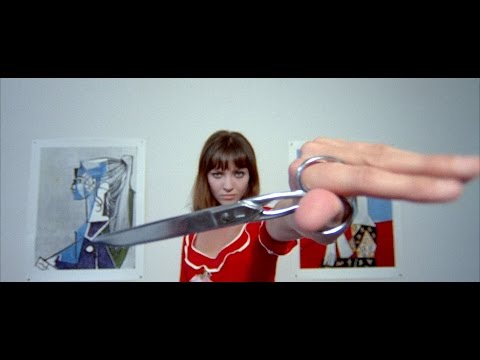
Friday, May 2, 2025

The Art of Sound Design

After watching this video, what do you notice about the importance of sound design in film?  Why is it so essential?

    Sound design is important in order to bring your film to life; it's able to elicit emotions that the visuals alone could not have achieved. Sound design is able to make a scene much more dramatic and immersive, which is one of the greater effects that sound design has on the audience. This is so essential because the biggest factor of any film that you need to consider is the emotional impact and value that it has. Emotions are one of the most powerful tools that can be used to tell your story and message. Audiences will leave remembering what they felt during it the most. Emotions are how you connect to people, which is why sound is so vital in film. Without sound design, that impact and emotional value would be greatly diminished and the tone would be harder to discern. Additionally, sound design can be used to tell a story. This can be by adding emotion but also by adding context or emphasizing specific points.

Thursday, May 1, 2025

Using EQ to Make Dialogue Sound Better

Explain the process of using the EQ to enhance your dialog.  Why would you want to use this process?

    To begin with, when using Adobe Audition, to open the equalizer, you must go to the effects tab and find filter and eq (in the video, he uses the Parametric equalizer.) The first step is to turn on the high pass filter and set it to 60Hz as there's generally not anything in the human voice below that level. Next is the low pass filter set to 18kHz (18000Hz) for similar reasons. The next steps are to reduce the harshness of the voice, then sweeten it up. For this process, it must be done by ear as there are no set of "ideal" values or numbers that can give you the desired outcome. First, you should boost a mid tone to 9db and narrow it by increasing the Q/width to 20. This creates a tool that you can use to more easily identify where the harshness is by amplifying specific frequencies. Once you find it, you should then lower the db to around -4 or -5 in order to reduce the harshness then widen the Q. Lastly, you should sweeten up the voice to make it sound better by adding bass boost and increasing articulation. To add bass boost, you simply just have to increase the db of some of the lower frequencies. When equalizing feminine voices, you'll have to boost in more as masculine voices tend to have more base already. To increase the articulation, you increase the db of higher frequencies. The reason why you'd want to use equalization is to improve the quality and have more professional sounding audio.

Wednesday, April 30, 2025

How to Fix Audio in Post

What are three common issues you might encounter editing your audio?  How could these be fixed?

    Three common issues you might encounter while editing your audio are background noise, unwanted dialogue sounds, and inconsistent audio levels. To try and eliminate or reduce background noise, you can use noise reduction software and/or an equalizer. The process to do so is mainly just adjusting different levels until it sounds good while avoiding creating issues in the dialogue. People often make a lot of other sounds while talking, i.e, lip smacks, loud breaths, and lots of aggressive s sounds, which you'll want to reduce in post so that people don't get annoyed by them. Many softwares can reduce these sounds and an equalizer can target some frequencies. If some of these sounds occur at the end of phrases, you can also use an audio transition or manually lower the volume of that part of the audio clip. In order to help fix inconsistent audio levels, you can use a normalizer to either increase the gain or to set the audio at roughly the same level. You can also use a compressor to keep the occasional audio spike down to help maintain consistency. The video recommends using a 2:1 ratio with a fast attack and release, then slowly lower the levels until you reach something that feels natural, then you will most likely have to increase the gain to bring the levels back to the ideal sound.

Tuesday, April 29, 2025

How to Edit Audio (Unfinished)

Summarize the steps in editing your audio for video.  Why are they each important?

    The first step in editing your audio is file management. Before you even begin, you should name your new project accordingly so that it is much easier to find the project and files in the future. Now you can import it, then you must log it. Figure out a system that works for you, separating different files into different folders or bins and organizing them by whatever metric makes sense to you. The second step in audio editing is Syncing your audio. If you recorded using a single-system, i.e., a mic connected to the camera, you won't have to do this step. But if you used a dual-system, youThe third step is dialogue editing and ADR... The fourth step is sound design FX/foley... The fifth step is background music... The last step is the final mix...

Thursday, April 24, 2025

Lucasfilm Field Trip Reflection

After hearing James Tooley speak at Lucasfilm, what insight or piece of advice from his experience in filmmaking and visual storytelling stood out to you the most?

    A piece of advice from his experience in filmmaking and visual storytelling that stood out to me the most was is advice to beginners. He recommended that you find something that interests you then learn everything you can from anywhere you can about it to give you the best shot. Education and knowledge is an extremely powerful tool that can exponentially increase you chances of succeeding. To corroborate, he explained how when he first got interested in animation, he went out and found books about animation, studying them and using them to practice and develop his abilities. Another piece of advice that he gave was to never stop learning and to keep practicing as much as you can. Practice. Practice. Practice. It sounds incredibly simple but it's true, practicing helps you learn every time you do it and can massively increase your skills from doing so. You should practice as much as you can to push yourself further and to become more assured in your skills. What this might look like for some more traditional roles in filmmaking is to just go out there and make films and make videos as much as you can; practicing videography, editing, audio, storytelling, etc. Doing so can greatly improve your skills in whatever you're practicing.

Friday, April 18, 2025

Beastie Boy Sabatoge Music Video

What kind of mood did the filmmakers and the artists create in this video?  What are 3 techniques that you noticed they used to create this mood? 

    The filmmakers and the artists created a comedic and ironic mood in this video. Three techniques that they used to create this mood are the camera work, visual elements, and the music. The camera work of this video is very notable for having a lot of hand-held shots and crash zooms, creating a more amateurish and video-like appearance, as opposed to a filmic look. This is purposeful in creating the right aesthetic; one akin to a low-budget, buddy cop movie. I believe that the excessive use of crash zooms and shaky camerawork was intentional to make fun of the often excessive camera work seen in some of those kinds of films. Additionally, they use very cheap and fake looking costuming—wigs and fake mustaches that are very obviously fakewhich creates a somewhat parody-like appearance to the characters in the video. Regarding the characters, there is a lot of overacting in this video, adding to the humor and parody aesthetic. In these buddy-cop films, characters often act in a generally dramatic and unrealistic way, which is recreated in this video in instances like the characters vaulting across the hood of the car, kicking open an unlocked gate, doing parkour, and running with flailing limbs.

Innovations of the New Wave Pt. 1

What were some key stylistic innovations of the French New Wave?  How did it change editing?     Some key stylistic innovations of the Fren...