Monday, May 12, 2025

What is B-roll

https://www.videomaker.com/let-b-roll-be-your-guide/

What is B-Roll?  Why is it important for a project?  What are 3 things to keep in mind when you're shooting B-roll?

    B-roll is additional footage that can supplement your main footage. This is most typically used in documentary filmmaking as your interviews are considered the main footage (or A-Roll) and any cutaways to other footage is typically the B-roll. B-roll is important for a project because it can show the viewer visually what someone is talking about. For example, when someone is talking about doing lab work, showing footage of them or someone doing that type of work can greatly support the idea and help it be more interesting to the viewer. Three things to keep in mind when you're shooting B-roll is to take notes during interviews, focus the B-roll on your goals, and to use footage that doesn't distract. It is a good idea to shoot your B-roll after interviews so that during them, you can take notes on what they talk about and get shots based on their answers. This will make sure you have footage for the points they make and help produce a more cohesive video. Having your B-roll focus on the goal is incredibly vital for your project as it will affect how the message lands with the audience. The article explains how an instructional video would want B-roll that demonstrates the product whilst a video about retiring officers would want to show off their accomplishments. It is important that your B-roll doesn't distract from your interviews because it will weaken your message and goals. This can occur from having footage that simply doesn't match with the dialogue, which can also be from having shaky footage as well.

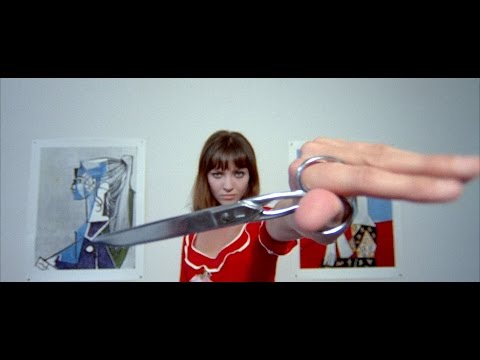
Friday, May 9, 2025

Writing a Doc Treatment

https://thestorydepartment.com/story-for-documentary-2-delivering-the-goods/

What are the 3 key things that this article tells the viewer to keep in mind?  Why are they important?

    Three key that this article tells the viewer to keep in mind are that treatments have be as good as they can be to engage the audience without the help of sound or picture, to write to guide the process, and that story is what motivates the viewer to watch. It is very important that your treatment is engaging and highly interesting because your audience won't be able to hear or see the moving you're trying to explain. Thus, the treatment will have to work harder to maintain that level of interest. Writing to guide the process means to create the treatment to not only interest investors but also in a way that it can provide a guide the filmmaking process. This can be done by planning an idea of what you want to achieve and using that to create the treatment. A very important part of a documentary is still the story. Despite the fact that it isn't a narrative film, a documentary still greatly benefits from having a narrative within it. Through the narrative, the audience maintains their attention and interest, which helps them to understand the message you're trying to put out.

Thursday, May 8, 2025

Nanook of the North

https://www.rogerebert.com/reviews/great-movie-nanook-of-the-north-1922

What are 2 things that the filmmaker did that are controversial?  Why were they?  Do you think the film was "authentic" after reading this article?  Why are why not?  Why is this film so famous?

    Two things that the filmmaker did that are controversial were staging scenes and choosing the cast of Inuit. This was controversial because it led people to put into question the authenticity of the film. One major point of discussion was the scene where Nanook was hunting a seal. As the seal was never shown to be pulled up, some argue that it may not have been authentic and that someone could've likely shot it. However, despite some things having been staged and the cast being chosen, despite not actually having the relation with each other shown in the film, I believe that it is still authentic. As the article says, "If you stage a walrus hunt, it still involves hunting a walrus, and the walrus hasn’t seen the script." Although staging and casting may not have been "authentic," the reality shown still was; the environment, the traditions, the daily lives, the hardships, and the people were all still real. I think that it's because of this that the film is so famous. It incredibly displays the true experiences that the Inuit people have and their way of life.

Wednesday, May 7, 2025

What is a Documentary

Imagine you are talking to a person who has never before seen or even heard of a documentary film. How would you describe it? What are some essential elements of a documentary film? What distinguishes a documentary film from a narrative (Hollywood) film or a broadcast news story?

    I would describe a documentary as an informative film that intends to answer question(s) and reveal the truth about a topic. Some essential elements of a documentary film is b-roll and voiceovers, which can come in the form of interviews or narration. The difference between a documentary and a narrative film is that it is non-fiction and isn't focused on making the audience believe what they are seeing as real because it already is. The difference between documentaries and a broadcast news stories is that documentaries are much more in-depth and narrative compared to news which is focused on delivering the now. Documentary could be considered an in-between of narrative films and news as it can utilize storytelling methods and the specific order of clips and interviews to paint a specific picture of a real life topic.

Tuesday, May 6, 2025

Music Video Reflection

Reflect on your performance in your music video group.  Look back at your pitch.  What was your role in the project?  What went according to plan?  What didn't?  How could you improve future productions?

    Looking back at what we pitched for the music video, I'd say that the finished result had improved from the original pitch. We took into account the feedback about having a stronger parody and leaned much further into the clumsiness and emotionally unstable protagonist. We included more scenes to flesh out the story and additional moments for the character to show off these traits. The overall look and goal went well and according to plan, but some of the things that we had intended to have were scrapped. This includes the original locations, extras, and one gag that we wanted to include. Fortunately, new dancers and locations were able to be secured and it didn't disrupt the shooting schedule whatsoever. Another thing that went well was the vision as throughout we maintained a solid aesthetic and knew what we wanted. In the future, to improve the productions, we could create better pre-production documents so that there is more structure and rely less on outside extras who may or may not be reliable—either by using people in the class, that we already know are reliable, or by decreasing the amount of actors we'll need in the story.

Friday, May 2, 2025

The Art of Sound Design

After watching this video, what do you notice about the importance of sound design in film?  Why is it so essential?

    Sound design is important in order to bring your film to life; it's able to elicit emotions that the visuals alone could not have achieved. Sound design is able to make a scene much more dramatic and immersive, which is one of the greater effects that sound design has on the audience. This is so essential because the biggest factor of any film that you need to consider is the emotional impact and value that it has. Emotions are one of the most powerful tools that can be used to tell your story and message. Audiences will leave remembering what they felt during it the most. Emotions are how you connect to people, which is why sound is so vital in film. Without sound design, that impact and emotional value would be greatly diminished and the tone would be harder to discern. Additionally, sound design can be used to tell a story. This can be by adding emotion but also by adding context or emphasizing specific points.

Thursday, May 1, 2025

Using EQ to Make Dialogue Sound Better

Explain the process of using the EQ to enhance your dialog.  Why would you want to use this process?

    To begin with, when using Adobe Audition, to open the equalizer, you must go to the effects tab and find filter and eq (in the video, he uses the Parametric equalizer.) The first step is to turn on the high pass filter and set it to 60Hz as there's generally not anything in the human voice below that level. Next is the low pass filter set to 18kHz (18000Hz) for similar reasons. The next steps are to reduce the harshness of the voice, then sweeten it up. For this process, it must be done by ear as there are no set of "ideal" values or numbers that can give you the desired outcome. First, you should boost a mid tone to 9db and narrow it by increasing the Q/width to 20. This creates a tool that you can use to more easily identify where the harshness is by amplifying specific frequencies. Once you find it, you should then lower the db to around -4 or -5 in order to reduce the harshness then widen the Q. Lastly, you should sweeten up the voice to make it sound better by adding bass boost and increasing articulation. To add bass boost, you simply just have to increase the db of some of the lower frequencies. When equalizing feminine voices, you'll have to boost in more as masculine voices tend to have more base already. To increase the articulation, you increase the db of higher frequencies. The reason why you'd want to use equalization is to improve the quality and have more professional sounding audio.

Innovations of the New Wave Pt. 1

What were some key stylistic innovations of the French New Wave?  How did it change editing?     Some key stylistic innovations of the Fren...