Wednesday, December 10, 2025

What is Rack Focus

https://www.videomaker.com/shooting/visual-storytelling/what-is-the-rack-focus-shot/#:~:text=What%20is%20rack%20focus%3F,the%20background%20or%20vice%20versa.

How can using a rack focus shot enhance the storytelling and emotional impact of a scene in your own films? Provide an example of a situation where you might use this technique effectively.

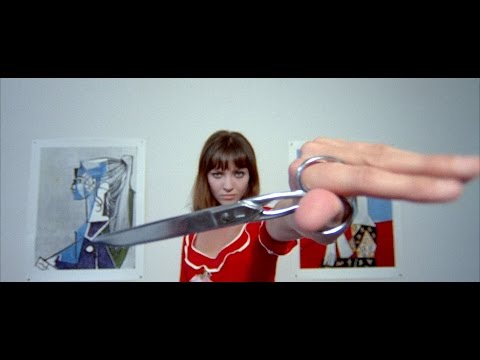
    Rack focus is a technique where the focus is changed during a shot in order to direct the audience's attention. This can be used to enhance the storytelling and emotional impact of a scene in my own film as I can use it to reveal specific information to the audience and form connections between different things. For example, I can rack focus to a detail that was in the background to reveal it. Another potential way that I can use this technique is in a similar way that the Kuleshov effect works by creating an idea through an association, such as showing an object then racking focus to a person's face to show their emotion. This can place emphasis and different ideas onto that object and convey a multitude of emotions.

Tuesday, December 9, 2025

Back Focus


What is back focus?  How does affect the image that you are shooting? How do you check the back focus?  Are our JVC camcorders different than the Sony EX3?  How?  What are the key differences between adjusting the back focus?

    Back focus is the distance between the rear lens element and the camera sensor. It affects the image while shooting as having an issue with the back focus can lead to the image losing clarity when zooming in or out. In order to check the back focus, you must zoom into a hard edge and focus it before zooming out fully. If the image goes out of focus, then there is an issue with the back focus. In order to fix it, you can use a Siemens Star by zooming into the center of the chart, focusing it, zooming out, then adjusting the back focus. You should repeat the process around three times in order to properly set the back focus. The JVC camcorders are different than the Sony EX3 as most lenses allow you to adjust the back focus on it, but the EX3 handles it within the camera.

Monday, December 8, 2025

Depth of Field a Simple Guide

In your own words, what are the three key factors in determining depth of field for your shot?  Explain in detail how each of these three factors affects the depth of field.

    Three key factors in determining depth of field for your shot are distance from subject, the focal length, and the iris. The distance that the camera is from the subject affects the depth of field as the further that the point of focus is from the lens, the deeper that the depth of field is, and closer the point of focus, the shallower the depth of field will be. Similarly, a smaller focal length which has a wider shot creates a deeper depth of field and a longer focal length creates a shallower depth of field. The third and more primary factor for adjusting depth of field is the iris; using a higher f-stop creates a deeper depth of field and using a lower f-stop creates a shallower depth of field.

Thursday, December 4, 2025

Sensor Size and Cinematography

How do larger sensors affect the image? How does sensor size affect using lenses? What are the benefits and drawbacks of using a large sensor camera?

    Larger sensors affect the image as... The sensor size affects using lenses as... The benefits of using a large sensor camera are... The drawbacks are...

Wednesday, December 3, 2025

The Image Sensor's Role in Video

https://www.videomaker.com/article/f6/17249-the-image-sensors-role-in-video 

What is the role of the camera sensor in a video camera? How does the CMOS sensor work? What does having a larger sensor do for the image?

    The role of the camera sensor in a video camera is to... The CMOS sensor works by... Having a larger sensor...

Tuesday, December 2, 2025

Camera Sensors

What are the pros and cons of a CCD sensor? What are the pros and cons of a CMOS sensor? What are CCD sensors better at?  What are CMOS sensors better at?

    The pros of a CCD (Charged Couple Device) sensor are that they produce clean and relatively noise free video. The cons are that the process was inefficient as some charge was lost as the electrons shifted, the serial read out was slow, and the energy cost was high. The pros of a CMOS (Complementary Metal Oxide Semiconductor) sensor are that there are low power requirements and faster image capture because of parallel processing. The cons are that is has higher noise and rolling shutter, meaning that the info is read from top to bottom line by line, which can result in a "jello" effect. CCD sensors are better at having a clearer image. CMOS sensors are better at efficiency and speed.

Monday, December 1, 2025

Controlling Depth of Field

What are the different factors that you can use to control depth of field that this video mentions?  What is one of the primary ways to control depth of field?

    The different factors that we can use to control depth of field mentioned in the video are adjusting your aperture, changing your distance from the subject, and/or changing the focal length. Decreasing the aperture create a shallower depth of field and increasing it creates a deeper one. The distance from your subject can also dictate the depth of field as being closer decreases it whilst being further can increase it. Using a longer focal length decreases the depth of field, so when you're more zoomed in, the shallower your depth of field will be. One of the primary ways to control depth of field is through the aperture as your focal length and distance from subject should be dictated by the framing and composition rather than the deepness of your depth of field.

Innovations of the New Wave Pt. 1

What were some key stylistic innovations of the French New Wave?  How did it change editing?     Some key stylistic innovations of the Fren...