Tuesday, January 6, 2026

Spring Semester Goals

Look back at the goals that you set in the fall. Did you achieve them? Why or why not? How can you take steps or make corrections to achieve these goals? Where will you need to look to gather help or resources?

    Looking back at the goals that I set in the fall, I have done fairly well at achieving them. Thus far, I have acted in nearly all of the films that the advanced class has made and I have also acted in a fair share of the beginners' projects. I have also grown much more as a filmmaker and have learned a lot more technical skills and knowledge, such as lighting. That being said, I haven't made any personal projects; however, I have been able to create a fair few projects that have more of my ideas and vision imbued into it.

    Regarding how I can better achieve these goals, for the first two, there is infinite room to grow as I can act in more project and I can always learn more. Regarding the third goal, some steps I can take are stepping up in director and writer roles in order to give these projects more of a personal connection to me. I'm hoping to be able to take on these roles for the noir project and so I can look towards examples and different sources to learn more about noirs and writing in order to create the story and vision for it. For example, I could watch a variety of noirs to understand the storytelling of the genre for both writing and visually. I can also watch documentaries to better understand the process and meaning behind different techniques that are commonly present in noir films.

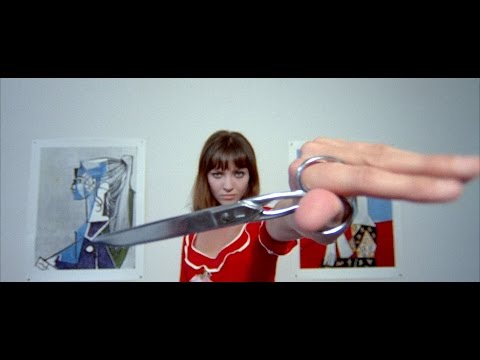
Thursday, December 18, 2025

Fall Semester Summary

As our semester draws to a close, take some time to reflect on what you've learned.  Write down three things that you've learned and how they will improve your video projects in the future.  For those who are continuing into next semester, also list three things that you are looking forward to learning in the Spring.  Why do you want to learn these things?  What do you want to concentrate on doing better?  What could you improve?  What kind of projects are you looking forward to?

    Three things that I've learned this semester are visual storytelling, story structures, and character writing. The different elements of visual storytelling that I've learned include color and composition, which can massively improve my future film projects as it can deepen the meaning behind my images, creating a more interesting and meaningful film. This can make the film connect better with the audience because of the different ideas that will be conveyed by the different visual techniques. Knowing and understanding how story structures can be used is able to improve my films as it can work as an effective tool that can improve the story and plot of my film, making it more cohesive and potentially more interesting for the audience. One of the biggest parts of a narrative film are the characters, and learning ways to write stronger characters can make my future films much more engaging and connect better with the audience.

    Three things that I'm looking forward to learning in the Spring are how to use lighting, how lighting can impact the visual storytelling, and additional technical skills and equipment. I hope to learn lighting as it can massively improve the production value of my films.

    Next semester, I want to concentrate on learning more technical skills. This semester, I worked less on the technical side of filmmaking as I was acting for most of our projects and assignments. I could also improve on my professionalism and productivity as I missed a lot of assignments. I'm looking forward to the Noir project as I believe that I can learn a lot from it and produce an interesting film.

Wednesday, December 17, 2025

Deep Focus

How does deep depth of field affect the audience's film experience?  Why would a filmmaker want to use shallow vs. deep depth of field?

    Deep depth of field affects the audience's film experience as it allows them to see more in the frame and gives them more autonomy in what they decide to focus on. It can also allow the filmmaker to take on a more painting-like approach to the image by having details and meaning packed in a single shot. A filmmaker may want to use shallow depth of field because it allows them more control over the audience's attention and it produces a more "cinematic" aesthetic. A filmmaker may wish to use a deep depth of field because of the previously mentioned technique, but it can also be used to show off detailed sets, extreme long shots, a large number of people, etc.

Tuesday, December 16, 2025

Focus Tools

What is the peaking function on your camera?  How does it work?  What are the four different tools you can use right now to improve your focus that the presenter brings up in this video?  How can you put these to use right away?

    The peaking function on cameras helps show whether your image is in focus. It works by highlighting sharp edges seen on camera; thus, when your subject is in focus, it will have sharp edges which the peaking will highlight using high contrast colors. Four different tools that I can use right now to improve my focus mentioned in the video are peaking, magnification, eyes, and a flashlight. As previously mentioned, peaking allows me to more clearly see what is in focus as it highlights sharp edges in the image. Another tool that I can put to use is magnification, which can allow me to more accurately see what is in focus by magnifying the image into the spot I want to focus on. Using eyes as a focus tool is a good rule of thumb as eyes are generally what you want to have in focus when filming people. The fourth tool is using a flashlight, which can be a tremendous help when trying to focus an image that has low lighting. I already use most of these tools when determining focus, but the next time I need to focus an image that has dim lighting, I will prepare a flashlight in order to help.

Monday, December 15, 2025

Setting Marks for Actors

What are the rules for setting marks that this video mentions?  How can you begin using these suggestions immediately in your productions?

    Marks are a useful tool that can help improve how smooth a shoot can run regarding talent and actors. You are able to use them to show where an actor should be in a shot so that the framing and focus is maintained. The rules for setting marks are to use different colors for each actor in the scene, use a separate and dedicated color for focus or camera department marks, and ensure that your marks aren't visible in a shot. The options for what can be used as marks are tape, sandbag marks, and t-brackets. I can begin using these suggestions in my productions by preparing tape or designated marks for my next project and utilizing them for the actors.

Friday, December 12, 2025

High Tea Reflection

Live shoots can be a whole different animal in video production. They present their own unique challenges.  Reflect on your High Tea shoot yesterday.  How did the shoot go?  What were some challenges?  How did you overcome them?  What would you keep in mind for your next live shoot?

    The shoot went generally well. We set up in advanced and were ready by the time the event went into gear. From what I heard, we had a good line of communication with the teachers and planned accordingly. We shot a lot of good footage and b-roll from the day prior to, before, and during the event. My role was sound recording and mixing and there were a few issues that arose. We had connected to their sound system; however, it was coming in and out throughout the event and wasn't very usable. Fortunately, we had also set up a shotgun mic on a stand that was pointed to the speaker and we had connected that directly to the mixer using an XLR cable. This worked well, just the sound was less crisp that it would've been if the connection to the system wasn't spotty. In the future, I can take additional precautions by recording sounds via additional methods. Another thing I can try and do is position myself closer to the transmitter so that the connection isn't so spotty.

Thursday, December 11, 2025

Stills vs. Cinema Lenses

What are 4 key differences between still lenses for video and cinema lenses?  Why would you use a still lens to shoot video?  What would you need to shoot with proper cinema lenses?

    Four key differences between still lenses for videos and cinema lenses are... I might use a still lens to shoot a video as... Proper cinema lenses would be needed to shoot...

Innovations of the New Wave Pt. 1

What were some key stylistic innovations of the French New Wave?  How did it change editing?     Some key stylistic innovations of the Fren...