Thursday, February 5, 2026

Setting up a Light

What are three key important details when setting up a light properly? What are the proper terms when instructing someone to change where the light is pointing?

    Three key important details when setting up a light properly all have to do with safety: bagging your stands, using callouts, and properly running your cables. It is important to use sandbags on all of your lights so that they don't fall, especially so that they don't injure someone. Using callouts such as "striking' is important as it warns people that a light is about to turn on so that you don't blind them. Running your cables correctly in important to minimize tripping hazards on set, which can prevent damages and injuries. The proper terms when instructing someone to change where the light is pointing are tilting, panning, and sticking. Tilting is when you rotate the light along the vertical axis, panning is when you rotate along the horizontal axis, and sticking is when you move it up or down vertically.

Wednesday, February 4, 2026

The Direction of Lighting

What do you notice about front lighting? Top lighting?  Side lighting? What does the angle of your light have to do with your character and story? How can you incorporate this in your film noir?

    I notice that front lighting causes little to no shadows to appear on the face, creating a flatter look. Bringing the light source higher still maintains a flatter look, with the introduction of a few shadows. This is usually known as "Beauty Lighting" as it highlights the cheekbones and the shadows hide the chin and define the jaw. For top lighting, it has dramatic shadows that cover almost the entire face. This creates an unsettling feeling primarily because the eyes are cast in darkness. Under lighting reverses the light in shadow and creates an unnatural look. When it comes to side lighting, the most commonly accepted angle is a 45° angle, which is still frontal, but casts shadows onto half the face. It also allows light to shine onto the cheekbone, which creates the "Rembrandt Lighting" effect. True side lighting fully casts half the face in shadow, which creates a split down the middle of the face. Going further, the light becomes an edge light, only illuminating the edge of the face, keeping most, if not all of the subject in shadow. The angle of your light can affect the character and story as the amount of shadow on the face and the shape of these shadows can create different impacts on the audience. I can incorporate this into my film noir by utilizing these different effects to deepen the storytelling, such as lighting only half of a character's face in order to show a split, or by changing the height of the light in order to make the face look unsettling and off.

Tuesday, February 3, 2026

Lighting the Human Face

Stunning Photos Reveal How Lighting Can Vastly Change Our Perception of the Human Face

What do you notice about how the angle of lighting affects the human face? What does the lighting do the ladies face at those angles? How could you start using lighting angles intentionally in your future productions?

    Some of the effects that the angle of light has on the face are a drastic change in mood and depth between the images. The first images are considerably brighter and appear flatter, with no shadows on the faces, whereas the second images cast the face heavily in shadow. The darker image conveys a more somber or eerie mood compared to the brighter ones. When I pause the video at 0:23, the lighting causes her face to be lit from underneath, creating a more unnatural look as the shadows are being cast upwards. I could start using these lighting angles intentionally in my future films by considering the effects that these different looks have on the audience and scene.

Monday, February 2, 2026

Using Flags to Control Shadow and Light


What are flags used for on set? What are three key things you learned in the video that you can put to use when lighting?

    On set, flags are used for cutting, or blocking out, light. Three key things that I learned in the video which I can put to use when lighting are using flags as a topper, bottomer, or sider. The topper is used to cover the top of the light, keeping the subject lit but eliminating spill on the background. A bottomer is the same, just blocking the bottom, and it can be used to block the subject from the background. A sider is the same just on the horizontal plane so that you can remove spill. Some other terms used are the "Meat Axe" flag, which is a 30" by 36" flag, a floppy, which is a flag that has velcro which unfolds addition fabric, increasing the length, and cutters, which are 2' by 6' and also tend to have the same flap that unfolds as floppies.

Friday, January 30, 2026

Rembrandt Lighting

What is Rembrandt lighting? What is Chiaroscuro? What is important to consider when you are trying to achieve low-key lighting?

    Rembrandt lighting is inspired by the lowkey lighting effects which artist Rembrandt Van Rijn used in his paintings. This effect is when a part of the subject's face is in shadow, but not completely as some detail is still visible. Historians suspect that a window allowed light to shine directly on the subject's face, with a white wall filling in the shadow. In filmmaking, Rembrandt lighting is the lighting setup that makes a triangle of light under one of the subject's eyes. This is a good technique to use as it is aesthetically pleasing, increases the depth on the image, and is relatively simple to achieve. The definition of Chiaroscuro is the use of deep variations and subtle gradations of light and shade. When trying to achieve low-key lighting, it is important to consider the hardness of the lights, which side of the face is in shadow, and helping the subject stand out. It's good to use three-point lighting to achieve this look. A rule of thumb when using this lighting technique is to favor the shadowed side of the subject's face in order to increase the drama.

Thursday, January 29, 2026

Chiaroscuro

In a detailed paragraph, explain what chiaroscuro is.  How can it be used to create depth in the images you record?  How can you put this into action going forward with your projects?

    A chiaroscuro is a lighting technique that is used to create dimensional depth. A rule of thumb to utilize this technique is to alternate between light and dark in the image. This can be used to create depth in the images I record by hitting the subject from an angle so that part of them is cast in shadow and lighting the background over the dark part of the subject so that they pop from the background. I can put this into action going forward by considering this rule of thumb when lighting different scenes. If I properly place lights and consider practicals to use for the background, then I can create an image with a lot of depth and good visual aesthetics.

Wednesday, January 28, 2026

Foot Candles, Lux, and Lumens

Foot Candles: The Best Way to Gauge Light

What is a lumen? What is a foot candle? What is Lux? How do you think this could affect your understanding of lighting in the future?

    A lumen is the standard measurement of light. A foot candle (FC) is the unit of measurement for light intensity (illuminance), with a single foot candle being the illuminance produced by a candle that is one foot away from a subject. Lux is a unit of measurement used with regards to meters rather than feet. Thus, one FC is approximately 10 Lux (0.0929030436 FC = 1 Lux). This could affect my understanding of lighting in the future as it provides me a more solid and measurable idea of the strength of lights, which can increase my precision when it comes to making lighting choices.

Innovations of the New Wave Pt. 1

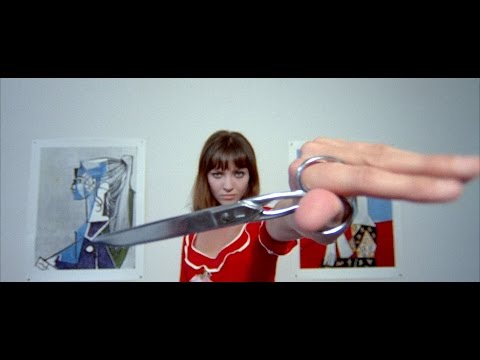
What were some key stylistic innovations of the French New Wave?  How did it change editing?     Some key stylistic innovations of the Fren...