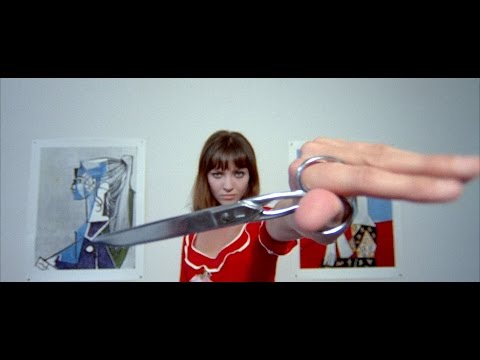
What are the key responsibilities of a Key Grip on set? How do they interact with the camera and lighting team?
The key responsibilities of a Key Grip on set is to . They interact with the camera and lighting team as .
What are the key responsibilities of a Key Grip on set? How do they interact with the camera and lighting team?
The key responsibilities of a Key Grip on set is to . They interact with the camera and lighting team as .
What is blackwrap? What does it do? What are 4 crafty ways you can use it on set that are mentioned in this video?
Blackwrap (or cinefoil) is essentially a matte black aluminum foil. It's primary purpose is to block light. Four ways that you can use blackwrap on set are (1) to flag, (2) eliminate lens flares, (3) create shapes, and (4) make cookies. You can fold blackwrap into a square or rectangle and clip it on to a light in order to use as a flag that eliminates spill. You can use it to eliminate lens flares by either blackwrapping the light or the camera, so that it acts like a lens hood. Another use of blackwrap is to create interesting shapes, such as curving it around a light to create a "snoot" which creates a round gradient of light. Blackwrap can also work as a DIY cookie by cutting out the shapes that you want into it then placing it in front of a light.
What are three key things you've learned by learning a bit more about the grip department?
Three key things I've learned about from these videos are that grips are problem solvers, they're responsible for shaping and controlling light, and the collaboration required. A major aspect of being a grip is thinking up ways to achieve the shot that the DoP wants. This could be through specialized equipment or creating a lighting setup or gag using the tools available in some seemingly unconventional ways. The key responsibility of the grip department is to shape and control lights in order to create a desired look. They are pivotal for setting up the lights as well as ensuring that everything is safely set up. The collaboration is incredibly important for the grip department as they are a team with a lot of moving parts. They work with the DoP and with each other in order to efficiently set up the different shots.
Your gaffer has tasked you with packing up a grip package for your current film noir shoot. Create a comprehensive list of all of the gear that you would need for your grip package. Be detailed! Use the jargon and terminology that you have learned so far. You should easily have over 10-20 items.
What is the purpose of flags? How can they be used to shape light? What are cookies? How do they affect the image? How can you combine these instruments to shape your light?
The purpose of flags are to eliminate unwanted spill and direct the light. They can be used to shape light by blocking out reflections as negative fill, removing spill that would be on the background or subject, or more dramatically to change the shape of the light, which can alter the focus of the image. Cookies are some kind of form which cuts the light in a particular way, typically in horizontal stripes in order to create shadows that look like window blinds. They affect the image by creating unique shadows that make the light appear as though it is passing through a window with blinds, or some other kind of element that can create shadows. I could combine these instruments to shape light by using a cookie to introduce the pattern to the shadow, then using flags to eliminate any spill and have the light only go where I want it to.
What are the four techniques you have available to you when trying to improve your lighting at noon? How do each of these four techniques affect your image?
Four techniques that I have available to me when trying to improve my outdoor lighting at noon are (1) reflect it, (2) diffuse it, (3) supplement it, and (4) control the location.
Reflectors allow you to redirect some sunlight into areas that you want it to illuminate and reduce most of the harsh shadows. This eliminates the worst shadows, but only for one side; however, using a white bounce board can solve the other side. This fully lights the face, but still varies in the intensity so that there is still depth in the image.
The second technique is to use a diffusor, which can dramatically soften the light, reducing the harshness of the shadows. A downside to using this techniques is that you have to expose the image based on the subject, which is now darker than the background, which could lead to an overexposed background. One way to resolve the issue of the background is to add a net behind the subject. Another way is to combine reflectors and a diffusor in order to bring back more light onto the subject and reduce the contrast between the subject and background.
Supplementing the light is introducing another light source in order to eliminate the harsh shadows. The issue with this technique is that it requires a powerful light in order to combat the sun. Personally, I feel that using one of the other techniques would be easier and more effective than trying to match the sun's strength with a light.
The fourth and cheapest technique that requires no additional equipment is to control the location. Ideally, you should look for a location where the subject and background is entirely in shade. If you want there to be light on the face, having one side open to sunlight and the other shaded by something such as a building can create an aesthetically pleasing look. Once again, you could combine previous techniques in order to get the desired look you want.
What are the differences between an Arri fresnel tungsten kit and the led lights you've learned about so far? What are some interesting features of them?
The differences between an Arri fresnel tungsten kit and the LED lights that I've learned about so far are . Some interesting features of an Arri fresnel kit are .
What were some key stylistic innovations of the French New Wave? How did it change editing? Some key stylistic innovations of the Fren...