Thursday, May 21, 2026

The Origins of Acting Pt. 2

What was traditional acting on the stage like in the 19th century?  How did Stanislavski change acting?  What was the Stanislavski System?

    Traditional acting on stage during the 19th century was still using the declamatory style that was seen in ancient Greece and Rome as (1) it was necessary due to the technical limitations and (2) it was seen as the traditional style of how theatre should have exaggerated acting. The idea was that theatre was only truly art when there was idealization or stress; where it wasn't naturalistic acting but rather simulated. Stanislavski changed acting as he found this simulated style of acting boring and was more interested in "living" the part. The Stanislavski System is a psychological approach to acting that focuses on getting the actors "into the moment." This includes (1) preparation of the voice and body, (2) studying the role, and (3) truth as the actor feels as though what happens to the character is real. To create realism, Stanislavski used emotional memory, which is where you think back to a time when you felt that feeling in order to show it outwardly; however, this was abandoned due to causing actors to go crazy.

Wednesday, May 20, 2026

The Origins of Acting Pt. 1

How did Greek and Roman theatre create the art form of acting?  What was commedia del' arte's influence on the development of acting?

    Greek and Roman theatre created the art form of acting through the development of theatre. Theatre began as spoken stories that were passed down through word of mouth. Eventually, theatre were created to develop the Greek god Dionysus with stories that included Lampoons, Comedies, and Tragedies. The performances had to be much bigger and declamatory; having to focus on vocal projection because of the larger open spaces that the crowds were in. However, theatre momentarily died during the Dark Ages after Rome fell. Commedia del' arte's influenced the development of acting as it was an incredibly popular form of theatre that spread amongst different cultures. It had many character types and acting styles that influenced early film as well such as Charlie Chaplin.

Tuesday, May 19, 2026

Auteur Theory Pt. 3

How did the French New Wave transition to the United States?  What influence did it have on cinema here? 

    French New Wave transitioned to the United States by . French New Wave influenced the cinema

Monday, May 18, 2026

Auteur Theory Pt. 2

How did French cinema critics begin to influence the development of auteur theory?  What were two key critiques they made on the difference between auteur directors and traditional directors?

    French cinema critics began to influence the development of auteur theory as . Two key critiques that they made on the difference between auteur directors and traditional directors were  and  

Friday, May 15, 2026

Autuer Theory Pt. 1

What is auteur theory?  How did it first develop in France?

    Auteur theory is that a film is the reflection of the creative vision of the director, wherein the director is attributed to being the author of the film akin to the way that a writer is the author of a novel. The conclusion from this theory is that a film's quality is directly tied to the director's choices and ability. It first developed in France because of the advancement into sound and the subsequent influence of larger studios who created less "artistic" films. Because of this, a return to the idea of film as art occurred, circulating the auteur theory.

Thursday, May 14, 2026

Guillermo Del Toro on Directing

What are the key pieces of advice that Guillermo del Toro gives beginning directors?  How can this apply to your career?

    Key pieces of advice that Guillermo del Toro gives to beginning directors are the mindset, share your opinions through a piece of work, and to simply just start. His first piece of advice is a simple as changing the way you think from "I want to be a director" to "I am a director," because as soon as you're actually doing something regarding any kind of media, no matter the level, you are still a director. His second piece of advice was to use work as a method of communicating your contempt towards different issues. He illustrated an example of if you dislike the movies that are being made, instead of complaining, you should make a film that exemplifies what you think movies should be like. His last piece of advice ties back to the first, but if you want to become something, simply just start doing it. Whether that be as a director or a writer, although directing does require more resources and collaboration than writing does. This can apply to my career as I could take these pieces of advice to heart and use it to drive my work and motivate myself.

Wednesday, May 13, 2026

What's the Point of a Director

What do you know about a director's role in a film?  What questions do you have about the director's role on a film?

    When it comes to filmmaking, people often gravitate towards and give the most attention towards the glamorous positions. One of the biggest ones being the director. Most people think of the director as the leader of a set; however, there's a lot more to a director's job than giving out orders. The director's role in a film is to make their vision come to life and make the decisions on set.

    The director is the creative lead of the film; they dictate the actual look of the production, primarily things such as costuming, sets, locations, props, makeup, and so on and so forth. They must work closely with each of the different creative departments both before and during the production in order to create the visual look of the film. Although they may not be in charge of the look camera-wise, they still have a lot of effects on how the film looks through color, costuming, and locations, all of which affect the impact of the film.

    Furthermore, the director's primary job is to work with the talent in order to bring the character's of a film to life. This involves building trust with the actors, rehearsing them so that they are comfortable and prepared, and, of course, directing them during the scene. It is important for the director to build trust with the actors so that they are more sure in what the director tells them. One way is to make them feel like the director has thoroughly planned and thought things out, which could be done with something as simple as having already designated spots for the actors to sit during a read through. Rehearsal is an important process for the director to lead as to allows the actors time to experiment with their performance in a more comfortable setting. Once it comes time for the direction, it is important for the director to approach it in a way that gives the actor the ability to effectively bring their characters to life. Thus, they should focus on telling the actor what their character is thinking and what their goal is in the scene, rather than simply telling them what to do.

    Some questions that I have about the director's role on a film is the scope of their working during pre-production, as, in my current experience, roles have been less solid and more fluid, thus responsibilities have been shared.

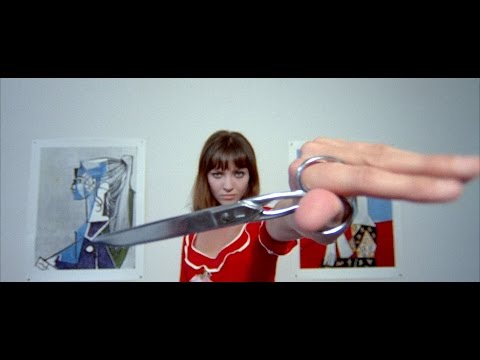
Innovations of the New Wave Pt. 1

What were some key stylistic innovations of the French New Wave?  How did it change editing?     Some key stylistic innovations of the Fren...