Friday, November 22, 2024

Storyboards

Why are storyboards so important for planning your film?  How does the script relate to the storyboards?

    Storyboards are important for planning because it allows you to visualize each shot before you start shooting which is incredibly helpful to know what you want to shoot as it can keep you on track and prevent you from forgetting a shot you wanted to take. You can also convey a lot of information on the storyboard, such as movement on screen or camera movements. The script relates to the storyboards as the storyboards are the visualization of what's been written down. They help to make the vision clearer for shooting the scenes written in the script. The script doesn't always say how the shot should be framed, just what's seen and what's happening. Thus, the storyboard allows the framing of a scene to be more solidified. You can also use a shot list as well if having a written list would be of more help.

Thursday, November 21, 2024

Three-act Structure

In your own words, summarize each act of the three-act structure and explain what its role in the story is.

    The three-act structure splits the story into three sections and follows the character arc of the protagonist. The first act is the setup where everything is established. This includes the exposition where the characters, setting, conflict, and premise of the story is given to the audience. In the first act, the inciting incident happens and the act typically lasts the first quarter. The second act is the confrontation where the protagonist has to overcome obstacles in their journey. There are often also a moment where it seems like the protagonist is going to win before everything falls apart as well as their lowest moment. The third and final act is the resolution. This act includes the climax of the story, the falling action, and the ending.

Wednesday, November 20, 2024

How to Write a Treatment

What is a treatment?  What are three key points of advice this article gives on how to create an effective one?

    A treatment is similar to a synopsis and an outline, however it is a multi-page document that is written in a story-structure. It's essentially a more detailed version of the outline and it works as a roadmap for the people working on the project. They can be great for experimenting with the ideas and tone of your film, allowing you to explore them without as much risk as doing so with the draft would have. It can also help you create a pitch as you have a better idea of the story after making a treatment.

    Three key points of advice that the article gives on how to create an effective treatment are to not go overboard with dialogue, create an experience similar to watching the movie, and to use the treatment to experiment. Many writers often forgo using dialogue all together, but the author of the article suggests using a few lines for emotion or humor. Dialogue should be kept to a minimum as it is likely to change and you don't want to get rid of an idea because of the dialogue. You should create experience similar to watching the movie by including the major points and the emotion of the project. The author includes a template with prompts that help create this experience and doing this will help increase engagement and desire for the project. Using the treatment to experiment is great as you can feel out different ideas, emotion, and concepts without as much repercussions as experimenting with the first draft. This can help solidify your vision and find ways to make the story better that you may not have tried otherwise.

Tuesday, November 19, 2024

Synopsis or Treatment

In your own words, explain the differences between an outline, synopsis and a treatment.

An outline is a guide or plan for the writer before they start writing. This typically includes all the major plot points, the theme, and most important details. You don't need to follow an outline perfectly; if you find that a different route with the story or characters feels more fitting, it may be better to deviate from the outline. An outline can also be used for other types of writing as well, helping to make it more organized and thought out. One kind of outline in television is a "beat sheet," which breaks down each scene into its major beats (or significant moments). A synopsis is typically a one paragraph description of the premise of your film or show. This basically explains the essence and concept of the story without revealing anything that may spoil the media. It's similar to a logline and it's what describes the story of your film on a one-sheet. This differs from an outline as it is intended for people consuming your film, rather than to help the writer create the story. A treatment is typically a 2-30 page version of your script. It's basically a more detailed version of an outline, written with a story structure. It's uncommon for producers to ask for a treatment and, if your pitch didn't sell it, it's unlikely for the treatment to do so.

Monday, November 18, 2024

Raising Arizona Reflection

How does Raising Arizona mix comedy with deeper themes like love and family, and how can you use this in your own films?

    The overall genre of Raising Arizona is comedy, however the major focal point and driving force of the plot are the deeper themes like love and family. The way they mix is that the genre of comedy allows a much greater suspension of disbelief, as the audience are going to be much more accepting of absurd topics and ideas. The external conflict of the film itself is objectively a ridiculous and absurd concept; if it were in any more serious genre, it would be seen as such and the audience would be less inclined to accept it. For instance, the fact that the Arizona's had quintuplets, the fact that, because of that, Ed thought they should kidnap one because "they have too much to handle," or all of the odd criminal activity surrounding H.I. and his friends. This way, a funky story about a couple kidnapping a kid was able to be accepted and the feelings from the deeper themes were able to shine through to the audience. The comedy aspects soften all the darker ideas that many of the topics in the film had, allowing for the mood to be so much more light-hearted and for the positive message to be the one left on the audience. If the movie had taken those darker topics such as kidnapping, recidivism, trying to make a life after having a criminal background, and infertility more seriously, the audience would've been more likely to take away those ideas rather than the positive themes and note that the movie ended with.

    I could use this in my own films by taking advantage of the different effects that certain genres and themes have on the audience to direct their emotions the way that I want. This way, after they watch my film, they leave feeling the way that I want them to. This could be by amplifying specific emotions or using a genre where there is more suspension of disbelief to help the audience accept some absurdity.

Friday, November 15, 2024

Pitching

What are three major tips from this article that you took away on how to create a great pitch?

    Three major tips from this article on how to create a great pitch are to focus on essential elements of your story, begin by revealing how you came up with the idea, and to leave the buyer in suspense.

    Focusing on the essential elements of you story is important as you are making this pitch in a very short amount of time and you want to be able to have time left to ask and answer questions and possibly make a second pitch if the buyer passes on your first one. Some key elements that should be established are the protagonist, their "everyday" life at the beginning, why we empathize with them, what opportunity is presented early on to get the story going, what situation are they put into by that opportunity, what visible goal or outer motivation are we hoping the protagonist accomplishes by the end, what is the conflict that makes the goal seem impossible, and what are two antecedents to your screenplay (successful films with the same genre, tone, and/or potential market as yours). In order to get all this information in, you need to avoid trying to tell the whole story and to not get caught up in explaining detailed scenes.

    Starting off the pitch by explaining where you're coming from can both give the buyer some context and also might give them the same excitement that pulled you to write the story. This can be from a personal experience, or that the story was based off of a true story, or a novel that you got the rights for, or an article that spurred your creativity.

    Leaving the buyer in suspense is important because it will leave them wanting more after your pitch. This can be used to push them to ask more questions and be more interested. Some ways to do this can be to put the title and tagline at the end, that way the buyer has a better understanding and the title has more value, and to not say what the ending is. Although you want to keep them in suspense, if the buyer asks a question—like what the ending is—you should answer it clearly and succinctly. 

Thursday, November 14, 2024

Pre-production Intro

What is pre-production?  What are the steps that a filmmaker must take to transfer an idea in their head into a form that is ready to be filmed on camera?

    Pre-production is the planning phase where you finalize all of the details of your film (eg., the script, budget, location, actors, and schedule) before you start creating anything. The steps that a filmmaker must take in order to turn an idea into something that is ready to be filmed are: (1) breakdown the script, (2) determine the budget, (3) work out a production schedule, (4) assemble your crew, (5) finish planning, (6) hire talent, (7) rehearse with the cast.

    The first step is to breakdown the script. This is a necessary step to take as it lays everything that is required out. This is typically done by having the AD go through the finalized script to create a breakdown of most every detail: times of day, locations, characters, stunts, extras, special effects, props, music cues, costumes, etc. This covers everything from the script on a logistical level and prepares you for what you'll need to put that script into reality.

    The second step is to determine the budget. This is the step where you find the pathway to achieve your vision as to the best of your ability (and budget). Figuring out the costs requires research on everything you'll need and you will have to decide where you should allocate funds within your budget. Having a higher budget gives you more leeway and the capability to invest in better tools for your film, but having a lower one means you'll have to get more creative on how you use your money.

    The third step is to work out a production schedule. A production/shooting schedule helps you and everyone involved know when and where scenes are being shot. You have to use your time effectively as natural elements such as the weather and daylight may end up working against you and affecting the production.

    The fourth is to assemble the crew, which includes the crew and department heads. Some key roles that need to be filled are the director, first assistant director, production manager, cinematographer (or director of photography), casting director, and a production ad costume designer. These departments will expand as the pre-production phase progresses and are vital throughout the making of your film.

    The fifth step is to finish all the planning. Typically, each department will work with the line producer (or production manager) to figure out what needs to be done to execute the vision. This stage includes location scouting and securing permits, creating a shot list and storyboard, and figuring out the props and equipment. After these are established the production manager will revise the budget to ensure everything fits. Settings, props, or scenes may have to be revised or even removed in order to fit within your budget.

    The sixth step is the hire the talent. This is typically led by the casting director, who will hold auditions for all the roles according to the script breakdown and director's notes. Finding cast who fits the role is important as it is difficult and may subtract from the film if roles are changed to fit the actor.

    The seventh step is the rehearsal process. This is a important thing to do before shooting begins as it prepares the cast for their roles and helps to understand the emotion behind their acting. This also gives time for the department heads to go through the final prepping stages to make sure everything is ready. Once this step is complete, you can sent out call out sheets to the whole cast and crew and begin the production phase.

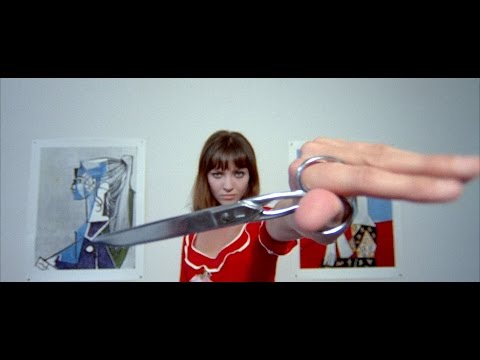
Innovations of the New Wave Pt. 1

What were some key stylistic innovations of the French New Wave?  How did it change editing?     Some key stylistic innovations of the Fren...