Friday, February 28, 2025

Milestones in Recording

How do you think these technological advances affected filmmaking? Which 3 of these advances do you think are the most important to video and film? Why?

    These technological advances affected filmmaking as the increasing developments allowed for sound to do more and more for films. The three advances that are most important to video and film are stereophonic sound, multitrack recording, and digital audio. The development of stereophonic sound introduced an entirely new dimension to the immersion of films; sounds could now be directional. This opens the door to new ways of storytelling through sound and making the audience feel like they're in the movie. Multitrack recording allowed for additional layers and complexity to audio and its manipulation capabilities. It allows for more precise editing and recording as you are able to layer audio. The introduction of digital sound is highly important with the transition from analog to digital in the industry. Digital sound allowed for more accessibility as well as even more freedom and editing capabilities. As said by the video, it allowed for common consumers to be able to edit sounds and played a role in the accessibility of modern video making.

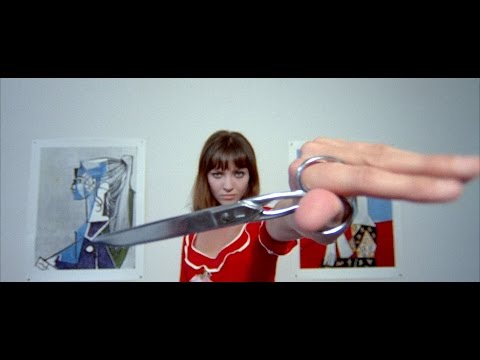
Thursday, February 27, 2025

History of Sound Questions

Take a moment to write down 2 questions about the history of sound at the movies that you would like to learn about. What do you want to know about these aspects of sound history?

    Two questions that I have about the history of sound at the movies that I would like to learn about is how did the technology of synchronous work for theaters and how did sound become digital? I'm curious as to the development process from the gramophone and phonograph to the technology that began to be used in theaters, and what they did to make it play in sync with video. It's hard to see how audio transitioned to digital and, although it was somewhat brushed upon in previous units, I want to learn more about that change and how it was developed.

Wednesday, February 26, 2025

Bit Rates

How would you describe the differences between the bit rates? Why do each of them sound different from each other?

    The differences that I noticed between the bit rates were about the quality; the lower bit rates had much more distortion and sounded more muffled than the higher bit rates. The difference is especially clear at 48kbps CBR as the higher bit rates had more subtle differences. Each of them sound different from each other as bit rate dictates how much data is uploaded per second. Having a higher one allows for more information to transfer and thus a smoother experience, the opposite when it comes to lower bit rates. You can think of it like water passing through a hole; the bigger the hole(bit rate), the easier it is for water(data) to pass through. When the hole is smaller, it's much harder for the water to come out.

Monday, February 24, 2025

What Does Sound Look Like?

What do you find interesting about this video? How does seeing sound visualized help you understand what sound is?

    Something that I find interesting about this video is the fact that sound itself is able to be visualized. Oftentimes, hearing, much like all the senses, is separated in an entirely unique category from the other senses. So to see how it can cross over and be sensed in a different way, i.e., through sight, is incredibly fascinating. Being able to see sound visualized helps me understand what sound is as it shows how it moves and, with the video especially, how it works fundamentally. The video explains how sound changes air density and can actually affect light, which is how it can be seen but also helps the viewer understand how it works.

Friday, February 14, 2025

Wrapping Cinema History

Take a few moments to reflect on what you have learned in this unit. The history of cinema is vast, and we could only cover a short part of it. After watching this video, what do you notice about the evolution of filmmaking? How did it all begin? How far have we come? In your opinion, where are we headed?

    Some things that I noticed about the evolution of filmmaking were how much it changed and the way some aspects sort of plateaued. In the beginning, it was incredibly rudimentary and was essentially just a gimmicky toy. When the invention of film came, the earliest motion pictures were only actualities, showing an incredible leap when people like George Méliès experimented with new techniques and content. The silent film era had the most rapid change, going from poor quality (in today's standards) to highly detailed and artistic feature length films that used special, in-camera, effects. This era saw the birth of the Star system and the boom of the film and entertainment industry as a whole. Many filmmaking techniques were solidified in this era, such as many types of shots and angles, some being more used or further developed as time went on. So far, we've come a long way if you were to compare modern films to earlier motion pictures. The film industry has been one of the fastest growing and evolving industries, and I think that it will continue being developed, hopefully in a positive way.

Wednesday, February 12, 2025

African Americans in Silent Film

Why was Micheaux so important in film history? What was so significant about his achievements considering the time period?

    Oscar Micheaux was so important in film history because he was the first Black filmmaker to have his films screened in "white" theaters and he tackled controversial topics within some of his films, Considering the time period, his achievements were so much more significant because of the rampant racism that the Black people of America had to face as well as the s

Tuesday, February 11, 2025

Bay Area Silent Roots

What are the roots of silent cinema in the Bay Area? How did it play an important role in early cinema history? What famous personalities made films here?

    The heart and birth of American filmmaking is often accredited to Los Angeles; however, the Bay Area also has a major role in the roots of silent cinema. Niles, now a neighborhood in Fremont, had been the home of Essany Film Manufacturing Company. It was a great location at the time because of the sunny weather and easy access to nearby railroads that led to both San Francisco and Chicago, some of the biggest locations for the exhibition of movies. This town and company played an important role in early cinema as it created one of the most well known silent film stars and producers today—Charlie Chaplin. During his time signed under the Essany Film Manufacturing Co., his role in the making of five films solidified his place as a movie star—having allowed him to transition from a minor supporting actor to a full out filmmaker, paving the way for him to create some of the most well known silent films. 

Innovations of the New Wave Pt. 1

What were some key stylistic innovations of the French New Wave?  How did it change editing?     Some key stylistic innovations of the Fren...